
Rezoning, pre-zoned, or as-of-right — and why it decides your project
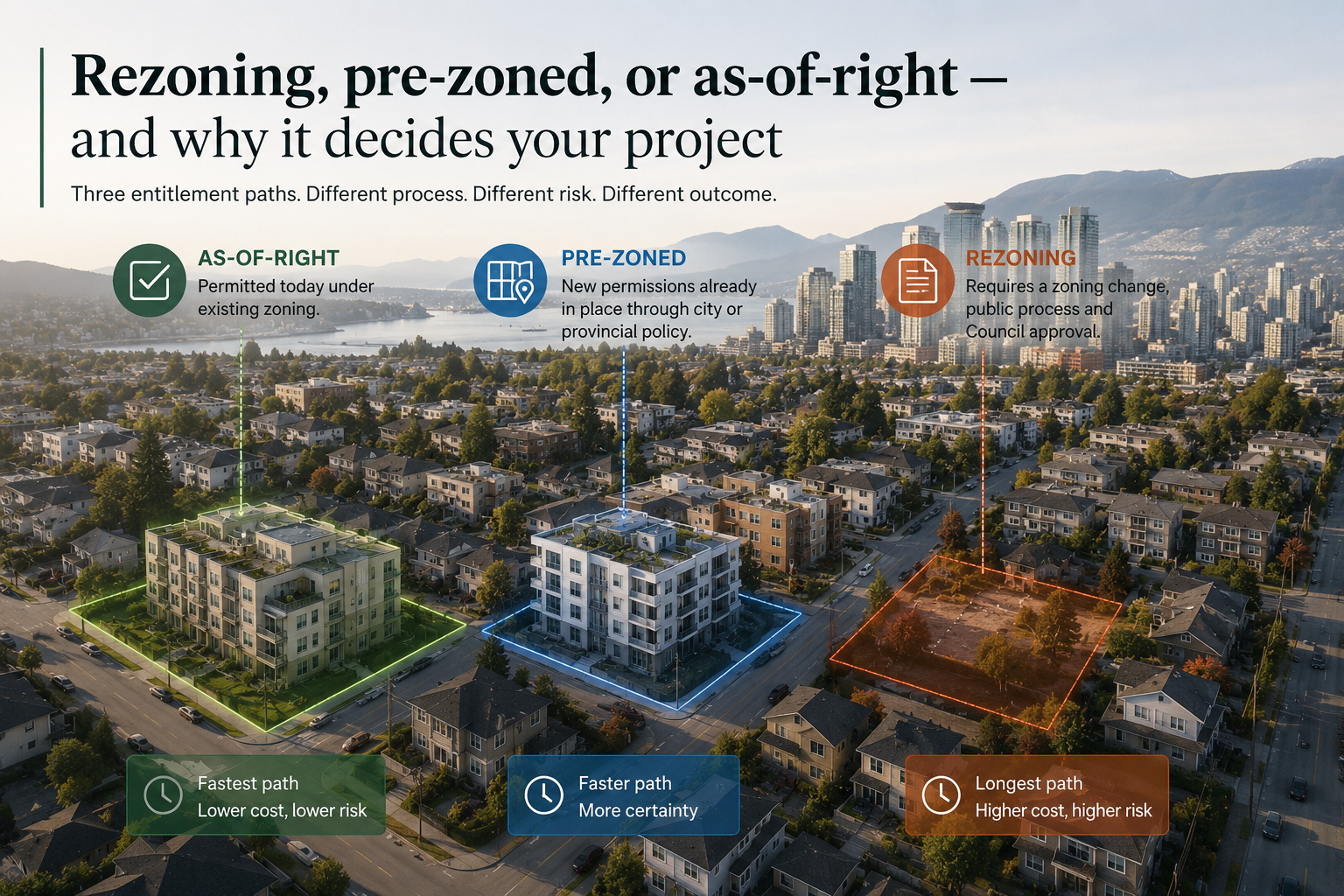
Before height, FSR, or design, one thing quietly sets the cost, timeline, and risk of a Vancouver project: the entitlement path. Here's the difference between the three, in plain terms.
Two lots can look identical — same size, same street, same allowable building — and yet one is a straightforward 12-month project and the other is a two-year gamble. The difference usually isn't the building. It's how you're allowed to build it: the entitlement path. Getting this right is the first real decision in any development, and it's the one owners most often underestimate.
There are three paths in Vancouver. Understanding them is the difference between pricing a lot correctly and badly overpaying.
1. As-of-right
"As-of-right" (or "outright") means what you want to build is already permitted under the current zoning. You don't ask permission to change the rules — you simply apply for a building permit and demonstrate you comply. There's no public hearing, no discretionary approval, no negotiation over what you can build. This is the fastest, cheapest, lowest-risk path, because the biggest question — will I be allowed? — is already answered "yes."
2. Pre-zoned
Pre-zoning is a close cousin. The city sets new permitted uses, heights, and densities across an area in advance, so that qualifying projects become as-of-right without each one going through its own rezoning. Vancouver's Villages Plan and the provincial multiplex (R1-1) zoning both work this way. The practical effect is the same as as-of-right — straight to development permit — but it's the mechanism cities are now using to unlock density at scale. If your project fits the pre-zoned rules, you skip the hardest, slowest step entirely.
3. Rezoning

Rezoning is the traditional path for anything beyond what the zoning allows. You apply to change the zoning on your site, city staff review and negotiate, and the proposal goes to a public hearing where Council votes. It is discretionary — approval is never guaranteed — and it typically comes with community amenity contributions and conditions. It's slower, more expensive, and far riskier, and that uncertainty gets baked into land values and financing terms.
Why the path drives everything else
| As-of-right / pre-zoned | Rezoning | |
|---|---|---|
| Certainty | High — rules are fixed | Low — discretionary vote |
| Timeline | Months | Often 1.5–2.5+ years |
| Cost & carrying | Lower; less holding cost | Higher fees, consultants, and interest while you wait |
| Financing | Easier to underwrite | Lenders price in approval risk |
| Amenity charges | Set, predictable | Negotiated contributions / conditions |
This is the core reason pre-zoning is such a big deal in Vancouver right now. Moving a site from "needs rezoning" to "pre-zoned" doesn't just save time — it removes the single largest risk in the pro forma, which is why land in newly pre-zoned areas tends to re-price quickly once the rules are certain.
The takeaway for buyers and owners
Before you fall in love with a site, ask which path its zoning puts you on. An as-of-right or pre-zoned lot can often be built years sooner and financed more cheaply than a lot that needs a rezoning for the same building — and that difference is real money. When you're comparing two properties, the entitlement path is frequently the more important variable, and it's the first thing worth pinning down.